Guide
Prep night: a chopper, a shredder, and the clean-up that follows
Dinner is rarely late because of cooking. It is late because of the ten minutes of chopping that has to happen before anything can go in a pan.
Two tools in this range attack that ten minutes from different ends. A blade chopper turns an onion into an even dice with one press. A shredder turns a cooked chicken breast into strands with one twist. Neither is clever, and both are worth the drawer space they take.
This guide covers what each one does, where each one stops, and what happens afterwards, because the clean-up is the part that decides whether a tool gets used again next week. The safety sections quote sources we read and dated rather than repeating kitchen folklore.
What a chopper is actually for
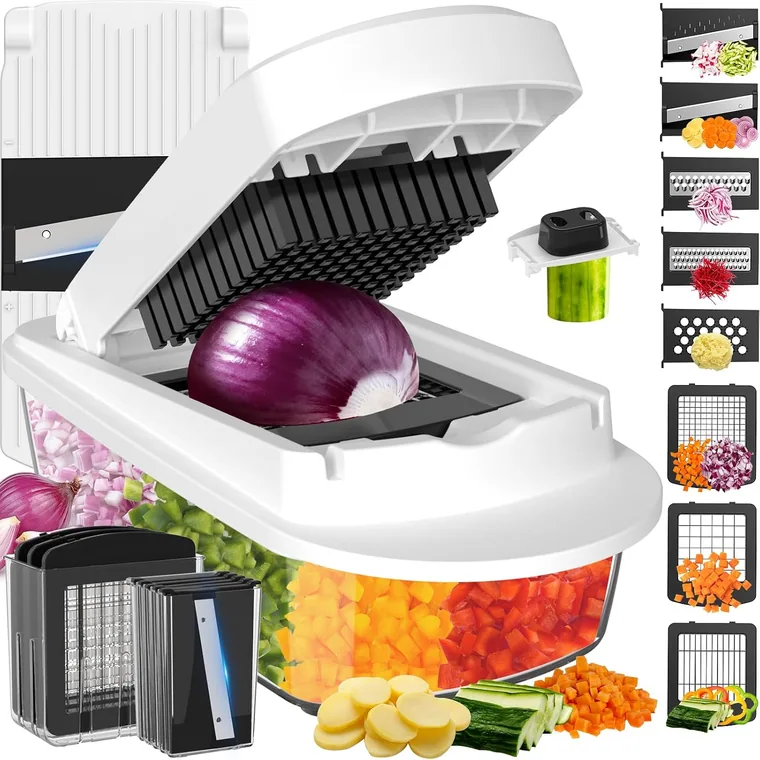
A chopper is a frame with a blade plate and a container underneath. Food goes on the plate, the lid comes down, and the pieces fall through into the container. The point is not speed alone, it is evenness: a dice done by hand at speed is a mix of large and small pieces that cook at different rates.
Ukeetap makes two versions of the same body. The eight-blade set covers dicing in two sizes, slicing and the common grater plates. The twelve-blade set adds finer plates and julienne cuts.
| Set | Blades | Best for | Price |
|---|---|---|---|
| 8-blade | 8 | Weeknight dicing, slicing, basic grating | $19.99 to $21.99 |
| 12-blade | 12 | Cooking from raw most nights, finer cuts | $29.99 |
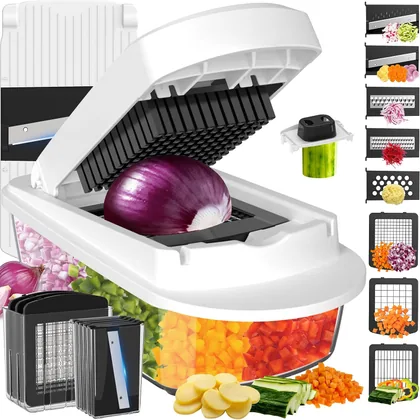


Both catch into a 17 litre container with a rubber base, which matters more than it sounds. The press puts real force through the frame, and a container that slides across the counter turns a two-second job into a mess.
Where a chopper stops being useful
This is the department with the lowest rating in our range, at 4.2, and the reviews explain why with unusual clarity. People who bought it expecting a mandoline were disappointed. People who bought it to dice onions were not.
The honest limits are these. Ripe tomatoes squash rather than cut. Anything you want sliced paper thin is a job for a mandoline with a proper guard. Soft cheese clogs the plates. And a chopper is slower than a knife for a single shallot, because the washing-up is the same either way.
Where it wins is volume. Three onions, two peppers and a carrot for a batch of sauce is four minutes of knife work and about forty seconds with the plate. That ratio is the entire case for owning one.
The shredder, and the two-fork problem
Pulling a cooked chicken breast apart with two forks takes longer than anyone remembers and produces ragged strings. The shredder is a bowl with cross teeth in the lid and the base: meat goes in, the lid twists, and the meat comes out in even strands.
Ukeetap makes one size, ten inches across, in five colours. The plastic is heat resistant by the maker's description, so meat can go in straight from the pan, and a brush comes in the box for the teeth.
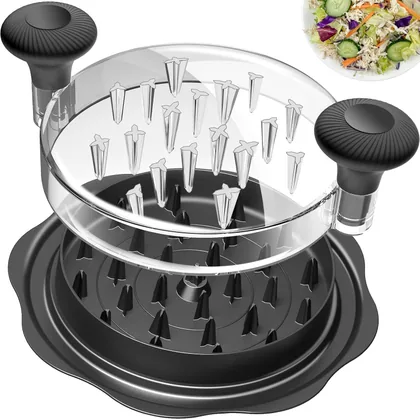
Two breasts at a time is comfortable. A whole rotisserie chicken goes through in three passes. It will not mince raw meat, and it is not a food processor, and asking it to be one ends in a cracked tooth rather than mince.
The part everyone skips: cross-contamination
A shredder sits exactly at the point where raw and cooked meet. The chicken going into it is cooked. The board it was carved on, the tongs that moved it, and the plate it waited on may not be clean in the way that matters.
The USDA Food Safety and Inspection Service gives the rule for boards in one sentence, and it applies to every surface in this paragraph:
However, consider using one cutting board for fresh produce and bread and a separate one for raw meat, poultry, and seafood.
The same source is specific about washing, and it is worth reading because it rules out the rinse-and-carry-on habit that most kitchens actually run on:
To keep all cutting boards clean, the Hotline recommends washing them with hot, soapy water after each use; then rinse with clear water and air dry or pat dry with clean paper towels.
For our tools that translates into two habits. The shredder is a cooked-food tool, so it should never meet a board that has had raw chicken on it without that board being washed first. And the chopper container, which holds cut vegetables destined for a pan, should not become the bowl a raw marinade is mixed in.
There is a third rule from the same page, about when a board stops being safe at all:
Once cutting boards become excessively worn or develop hard-to-clean grooves, they should be discarded.
Plastic tools follow the same logic. When a chopper plate is bent or a shredder tooth is cracked, the crack is where food sits, and no dishwasher cycle reaches into it.
Cleaning, and what the dishwasher does not reach
Every part of the chopper set is dishwasher safe by the maker's description, and the container is the part that benefits most. Blades come out cleanest when they are rinsed before anything dries on them, which takes ten seconds at the sink and saves a soak later.
The shredder is a different case. The bottom of the shredder can go in the dishwasher, but the teeth hold shreds that water alone will not lift. A brush comes in the box for exactly that. Using it takes about fifteen seconds and is the difference between a tool that stays in the drawer and one that ends up in a cupboard.
★★★★★
I've used these a lot, got it months ago and it's held up just fine. Easy to clean, can fit in a lot of different size drawers, looks alright... it's hard to go wrong. It's pretty easy to set up for your drawer.Should last a while, has lots of slots so I can put a few spatulas and some measuring spoons and measuring cups.
A note on staining rather than cleaning: turmeric and tomato colour white plastic permanently. If your cooking runs to curry and ragu, the black or grey body is the practical choice, and this is the reason we make it in five finishes rather than one.
What the container is really for
The seventeen litre box under the blades looks like packaging and turns out to be half the tool. It catches, it measures, and it carries, which removes two bowls from a weeknight.
Catching is the obvious part. Measuring is the quiet one: an onion diced into a clear container tells you at a glance whether you have the two cups a recipe asked for, which is not a judgement anyone makes accurately from a pile on a board.
Carrying matters when the pan is already hot. A container with a rubber base sits still on the counter, and the same base means it does not skate when it goes down beside the hob. Small things, and they are the reason a tool gets picked up again.
Two mistakes that make a chopper feel bad
The first is overloading the plate. A chopper cuts what fits under the lid in one layer. Two layers means the top one gets pressed into the bottom one and neither goes through cleanly, which reads as a blunt tool when it is a loading error.
The second is pressing slowly. The blades work best with one committed push rather than a gradual lean, and a slow press is also the one most likely to leave half-cut pieces stuck in the plate. Fast and once, then lift.
★★★★★
Super easy to put together. Easy to follow instructions. Quality parts. Looks stylish. Satisfied with this purchase and plan to buy more!
What food grade means on a prep tool
Both tools carry the same two phrases as the rest of the range: BPA-free and food safe. The words describe the material, and the regulator defines the category precisely.
A food contact substance is a substance that comes into contact with food and is not intended to have a technical effect in such food. This includes food packaging and its components, processing equipment, food preparation surfaces, or cookware.
The second half of that definition is the part worth knowing as a buyer:
Under federal law, a food contact substance that is a food additive must be authorized for that use before it is marketed in the U.S.
At Ukeetap we describe the chopper frames as food-safe ABS and the shredder body as food-grade plastic because that is what the materials are. The packaging that arrives with the product carries the legal labelling, and that is the document to read if a specification matters to you.
Batch cooking is where both tools earn their keep
Neither tool changes a Tuesday when dinner is two eggs. Both change a Sunday when the plan is four dinners at once, and that is the use worth buying for.
A batch of sauce needs three onions, two peppers, four carrots and a head of celery. That is fifteen minutes of knife work, and it is the reason the plan gets abandoned in favour of something from a jar. With a plate and a container it is under three minutes, and the difference is whether the Sunday happens at all.
The same is true of chicken. Two kilos of cooked breast pulled by hand is a job nobody volunteers for twice. Through a shredder it is four passes and a bowl, and the week has lunches in it.
A weeknight sequence that works
- Get the container out first and put the peelings straight into it as you work. A chopper with nowhere to put waste creates a second job.
- Chop everything before anything goes in the pan. The tool is fast enough that stopping to chop mid-cook is no longer necessary.
- Shred the chicken while it is still warm. Cooled meat tears rather than separating.
- Rinse the plates and the teeth before you sit down, not after. Dried food is the only thing that makes either tool annoying.
That is the whole method. Neither tool is complicated, and neither deserves a manual. What they deserve is a place in the drawer where they can be reached with one hand, which is a storage question rather than a cooking one.
When neither tool is the answer
If you cook for one and chop a single onion twice a week, a sharp knife and a board will always be faster once washing-up is counted. If you want translucent slices of fennel, buy a mandoline and treat it with the respect a mandoline demands.
And if the problem is that the kitchen has nowhere to put anything down, no gadget will fix it. That is the drawer and the cupboard talking, and those have their own guides on this site.
Read next
The measuring guide covers drawers, cabinet floors and the four numbers worth writing down before buying any organiser. The sink cupboard guide covers pipes, damp and how public health guidance says cleaners should be stored.
Sources
- USDA Food Safety and Inspection Service, Cutting Boards, read 31 August 2026
- U.S. Food and Drug Administration, Food Packaging & Other Substances that Come in Contact with Food, read 31 August 2026
This guide is general information about storage and kitchen equipment. For questions about the safety of a specific product in your home, read the labelling that came with it.